World Mind Games
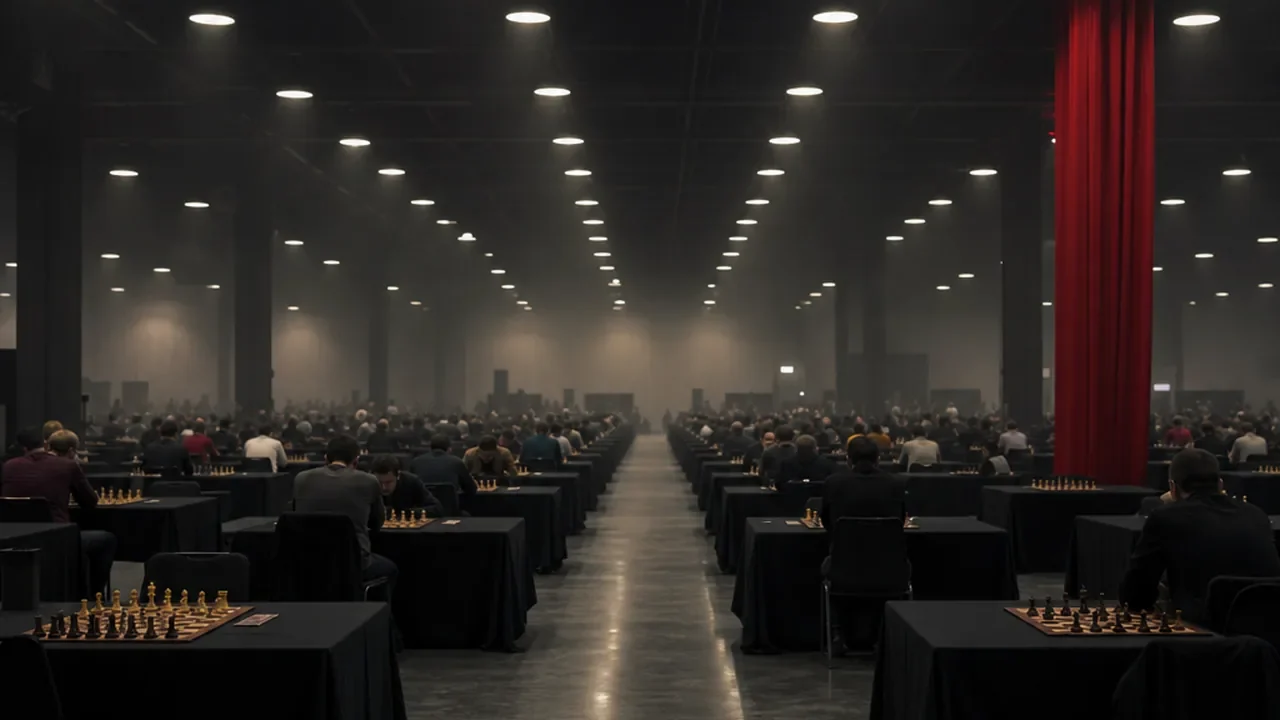
The SportAccord World Mind Games were an annual, invitation-only multi-sport event for the five leading mind sports — bridge, chess, draughts, go and xiangqi — staged in Beijing every December from 2011 to 2014. Across four editions, roughly 150 of the world’s strongest players from close to 40 countries gathered at the Beijing International Convention Center to contest medals in rapid-fire formats designed for spectators and television, with a prize fund that reached 1.4 million US dollars by 2013. This page tells the story of the event: where it came from, how it worked, what happened at each edition, and where the idea stands today.
What the World Mind Games Were
The event was conceived by SportAccord, the umbrella organization of international sports federations, in cooperation with the International Mind Sports Association (IMSA) and the five international federations governing the participating sports. The organizers described the games as a “gymnasium of the mind” — a showcase for the educational and cultural value of mind sports, built around top-level competition between the world’s best players.
Three things set the World Mind Games apart from the ordinary calendar of world championships in each discipline:
- Elite invited fields. There was no open qualification. The international federations selected the participants, and the published lists read like world ranking tables: for the 2013 chess events, FIDE nominated Sergey Karjakin, Alexander Grischuk, Levon Aronian, Shakhriyar Mamedyarov, Maxime Vachier-Lagrave, Hou Yifan, Humpy Koneru, Alexandra Kosteniuk and two dozen more of the strongest grandmasters of the era.
- Fast, spectator-friendly formats. Instead of weeks-long classical events, the program leaned on rapid, blitz and novelty formats — blindfold chess in the early years, the two-board basque system later, and “super blitz” sudden-death draughts from 2013 onward.
- An event around the event. Each edition came with a worldwide online tournament, a school and cultural program in Beijing, daily television production, and a WADA-compliant doping-free framework — unusual at the time for board games, and a deliberate statement that mind sports belonged in the organized sports world.
All four editions were held at the same venue: the Beijing International Convention Center in the Asian Games Village on Beijing’s North Fourth Ring Road, a short distance from the Olympic Green and the Bird’s Nest stadium. The choice of host city was no accident. Mind sports are deeply rooted in Chinese culture — go was invented in China some 3,000 years ago, and xiangqi remains one of the country’s most widely played games — and Beijing had the event-hosting infrastructure proven at the 2008 Olympic Games.
Lineage: From the World Mind Sports Games to SportAccord
The World Mind Games did not appear out of nowhere. In 2008, immediately after the Beijing Olympics, the International Mind Sports Association staged the first World Mind Sports Games in the same city — a much larger, open event with thousands of participants across the same family of disciplines. The SportAccord World Mind Games took the opposite approach: a compact, curated, made-for-broadcast event with only the very best players, organized annually rather than every four years.
The two concepts were complementary rather than competing, and both were carried by the same federations: the World Bridge Federation, FIDE (chess), the FMJD (draughts), the International Go Federation and the World Xiangqi Federation, with IMSA as the connecting body. The first four editions of the SportAccord event were all awarded to Beijing, with the People’s Government of Beijing Municipality, the Beijing Municipal Bureau of Sports and the Board and Card Administrative Center of the General Administration of Sport of China supporting the local organization. Commercial partners included the Swiss watchmaker Rado and Samsung in the early editions, joined by the Renault-Nissan Alliance from 2013.
The Five Disciplines and Their Formats
Every edition featured the same five sports, but the event program evolved noticeably over the four years.
Chess
The chess program ran separate men’s and women’s events throughout. At the first edition in 2011 the three formats were rapid, blitz and blindfold — six medal events in all. From 2013 the blindfold competition gave way to the basque system, a format in which two players face each other on two boards simultaneously, playing white on one and black on the other with around 20 minutes per clock. Players literally rolled between boards on office chairs, and the format proved a crowd favorite; reporters at the 2013 edition called it “a definite crowd pleaser.”
Bridge
The bridge competition was the broadest, with six titles per edition: teams, pairs and individuals, each in an open and a women’s series. The individual event was widely considered the hardest test in the game, since every player had to adopt a standard bidding system and partner all the other competitors in turn. Fields included the cream of the world game — Fulvio Fantoni and Claudio Nunes, Geir Helgemo and Tor Helness, the Herbst brothers, Sjoert Brink and Bauke Muller, Nicola Smith, Sylvie Willard and Wang Wenfei.
Draughts
The 2011 draughts program comprised men’s and women’s events on the international 100-square board plus an open event on the 64-square board. Later editions switched to a three-format structure mirroring chess: rapid, blitz and — new for 2013 — super blitz, a sudden-death knockout the commentators nicknamed “the draughts Armageddon.” Draughts also produced some of the event’s best stories, including the first major-title golds for African players.
Go
The go events changed the most. In 2011 the program consisted of a mixed doubles and a mixed team competition. From 2013 it settled into three events: a men’s team competition, a women’s individual tournament and pair go, the two-on-two format in which a male and a female player alternate moves on one board without consultation. The go competition was dominated by the East Asian powerhouses — China, Korea, Japan and Chinese Taipei — with European and North American teams invited to measure themselves against the best.
Xiangqi
The xiangqi program was the most stable: a men’s individual and a women’s individual championship at every edition. While Chinese players were the perennial favorites, the fields were genuinely international, with medalists from Hong Kong, Macau, Vietnam, Singapore, Australia and the United States — and the 2012 broadcast of the xiangqi final on CCTV-5 reached an estimated 70 million Chinese households.
Edition by Edition
2011: The First Edition
The inaugural SportAccord World Mind Games ran from December 8 to 16, 2011. The chess events produced a roll call of the era’s elite: Wang Hao won the men’s rapid ahead of Vugar Gashimov and Gata Kamsky; Maxime Vachier-Lagrave took the blitz title from Alexander Grischuk; and Zoltan Almasi won the blindfold event. On the women’s side, Hou Yifan — then the reigning women’s world champion — won both the blitz and blindfold titles, while Alexandra Kosteniuk took the rapid gold. In draughts, Alexander Georgiev won the men’s 100-square event, beginning a streak that would make him one of the faces of the games. China swept both go events, with Li He and Piao Wenyao winning the mixed doubles, and took both xiangqi titles through Jiang Chuan and Jin Haiying. In bridge, the Netherlands won the open teams and the United States the women’s teams.
The organizers judged the first edition a clear success: Beijing TV produced a world feed with four hours of daily coverage distributed across four continents, web portals streamed some 40 hours of competition, and the linked online tournament crowned its own winners — among them a 13-year-old Russian chess talent named Vladislav Artemyev — who were honored on stage during the games.
2012: Consolidation
The second edition, December 12–19, 2012, brought 150 players from 39 countries to Beijing. The chess field was headlined by Levon Aronian, Teimour Radjabov, Hou Yifan and Humpy Koneru; bridge featured Bauke Muller, Sjoert Brink and Sylvie Willard; and the draughts events ended in a double Russian triumph, with Alexander Georgiev defending the men’s crown and Matrena Nogovitsyna beating Ukraine’s Viktoriya Motrichko in a tie-break for the women’s title.
Off the boards, 2012 was the year the event broke through on Chinese television: CCTV-5 aired key sessions for the first time, and an estimated 70 million households watched the xiangqi and go finals. The online tournament grew 37 percent year-on-year to 380,000 players, with a record 1.7 million games played on Bridge Base Online. A full account of the confirmed podium finishes is on the results page.
2013: The Biggest Stage Yet
The third edition, December 12–18, 2013, opened with the announcement that 1.4 million US dollars in prize money would be shared among the 150 players from 37 countries, and with a broadcast plan projected to reach hundreds of millions of viewers. The sporting headlines were rich. In chess, Wang Yue won the men’s rapid ahead of Peter Leko, Valentina Gunina took the women’s rapid, and Sergey Karjakin and Zhao Xue won the debut basque events — the Chinese women swept the entire basque podium. In draughts, Georgiev won the rapid after an Armageddon tie-break against Roel Boomstra, Alexander Schwarzman won the inaugural super blitz, and the blitz event produced a sensation: N’Cho Joel Atse of Ivory Coast finished ahead of ten-time world champion Alexey Chizhov to become the first African gold medalist at the games.
Korea edged China for the men’s team go title by the narrowest of margins, Yu Zhiying won the women’s go gold, and the bridge ambassadors led from the front — Fulvio Fantoni anchored Monaco’s open teams victory and added pairs gold with Claudio Nunes, while Wang Wenfei helped China snatch the women’s teams title from England on the final board. Wang Tianyi defended his xiangqi crown and Tang Dan won the women’s title.
2014: A Record-Setting Finale
The fourth edition, December 11–17, 2014, offered 14 medal disciplines across the five sports, with 24 medal rounds and 150 players from 37 countries. Russia topped the medal count with six golds, five silvers and a bronze. Alexander Grischuk won both the men’s rapid and blitz chess titles; Hou Yifan won the women’s blitz and basque, with Ian Nepomniachtchi taking the men’s basque crown after beating Grischuk along the way. Bridge delivered drama at every turn: Israel won the open teams gold, England’s women beat the Netherlands on a carryover after the final board, the men’s pairs ended in a rare dead heat between Helgemo–Helness and the Herbst brothers, and 40 years into her career Nicola Smith snatched the women’s individual title by a single point on the last hand.
China swept all three go events — Mi Yuting and Yu Zhiying each left with two golds — while in draughts Roel Boomstra won the rapid, Alexander Schwarzman the blitz, and Cameroon’s Jean Marc Ndjofang capped the games by winning the super blitz, beating all three Russian grandmasters en route. A super blitz encounter between Georgiev and Ivanov even set a world record at 18 games. Jiang Chuan defended his xiangqi title and Vietnam’s Nguyen Hoang Yen won the women’s event. Closing the games, SportAccord’s director general called the edition “the benchmark for all future editions.” It turned out to be the last: the World Mind Games did not return in 2015.
The Online Tournament Arc
From the very first edition, the games were paired with a free worldwide online tournament, run in the months before the live event. The 2011 edition crowned winners in all five sports, from bridge to xiangqi. By 2012 participation had reached 380,000 players and 1.7 million games on Bridge Base Online alone. The 2013 edition added a new twist — online winners such as Cameroonian-born draughts player Lucien Thomy Mbongo and South African go champion Victor Guang Chow were flown to Beijing to attend and to test themselves against the live fields. The 2014 edition rounded out the digital program with an Instagram photo contest that drew entries from around the world. The online arm was central to the organizers’ stated mission: growing participation in mind sports globally through digital platforms.
Schools, Culture and the Doping-Free Stance
Every edition embedded a Social, Cultural and Educational Programme into the competition week. Grandmasters and ambassadors visited Beijing schools and universities — Tsinghua University, middle schools and elementary schools across the city — while groups of schoolchildren were welcomed to the venue to watch the world’s best at work and to play exhibition games. The 2014 organizers estimated the cultural program reached over 2,000 children through the activities of the event’s sporting ambassadors. A photo exhibition on the history and traditions of the mind games ran at the venue, and the whole event operated under a doping-free, WADA-compliant framework — a pointed assertion that mind sports were real sports, with the anti-doping obligations to match.
The Place of the World Mind Games in Mind Sports History
Four editions is a short life for a multi-sport games, but the World Mind Games left a lasting mark. They proved that elite board-game competition could be packaged for mainstream television — 22 channels carried the 2014 edition live across four continents — and they created formats, such as basque chess and super blitz draughts, that outlived the event itself. They gave mind sports a shared annual stage and a shared identity within the organized sports movement, and they produced genuinely historic results, from Hou Yifan’s serial dominance to the first African draughts golds won by Atse and Ndjofang.
The idea has not gone away. IMSA continued to organize elite mind sports events in China in the years that followed, and in April 2026 the association formally opened bidding for a 2026 edition of the World Mind Sports Games — the first step toward reviving the large-scale, Olympic-style gathering from which the SportAccord event descended. Whatever shape the revival takes, the Beijing games of 2011–2014 remain the reference point for what a compact, elite, broadcast-first mind sports event can be.
For the complete podium lists from all four editions, see the results and medals page. For the players who fronted the event’s outreach work, see the ambassadors page.
Frequently Asked Questions
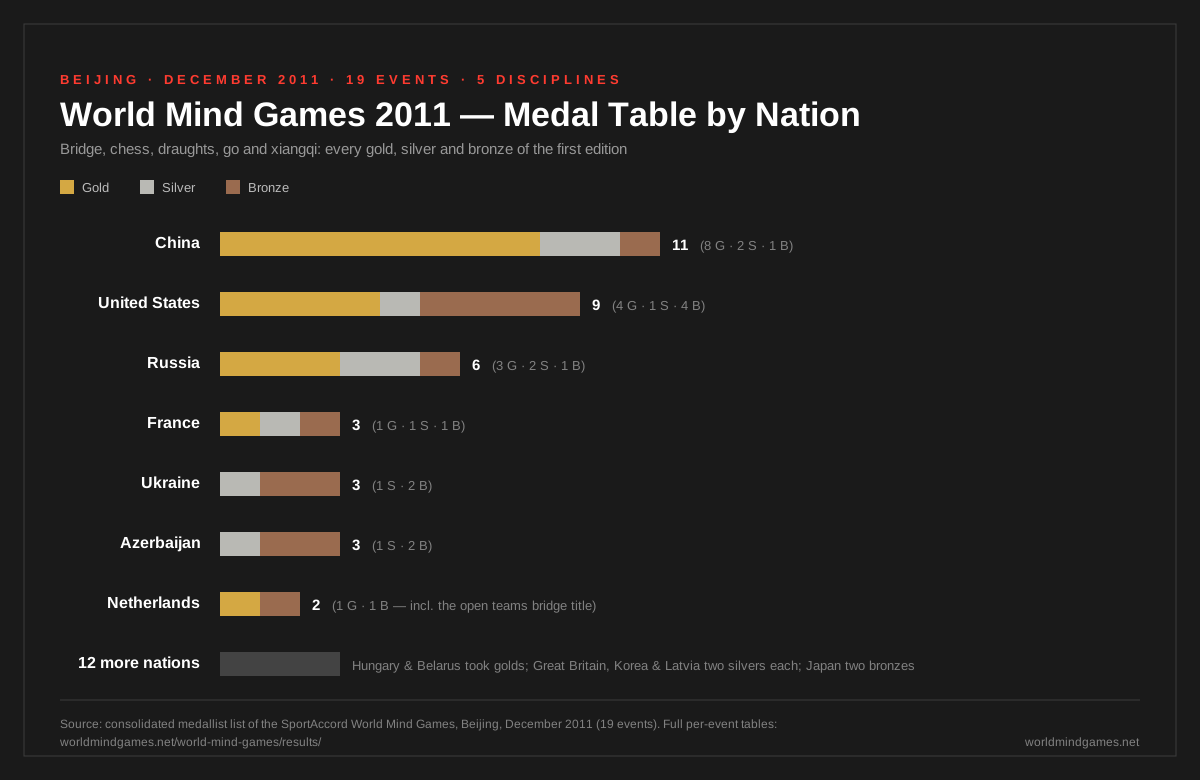
Reuse the medal table with attribution — copy this embed code:
<a href="https://www.worldmindgames.net/world-mind-games/"><img src="/wp-content/uploads/infographics/wmg-2011-medal-table.svg" alt="World Mind Games 2011 medal table by nation" width="1200" height="780"></a> Source: <a href="https://www.worldmindgames.net/world-mind-games/">World Mind Games</a>
What were the SportAccord World Mind Games?
An annual, invitation-only multi-sport event for the five leading mind sports — bridge, chess, draughts, go and xiangqi — organized by SportAccord with the International Mind Sports Association and the five international federations. Four editions were held in Beijing between 2011 and 2014.
When and where did the World Mind Games take place?
All four editions were held at the Beijing International Convention Center in Beijing, China: December 8–16, 2011; December 12–19, 2012; December 12–18, 2013; and December 11–17, 2014.
Which sports were on the program?
Five sports at every edition: bridge, chess, draughts (international and, in 2011, 64-square), go and xiangqi (Chinese chess). Across formats, the 2014 edition counted 14 medal disciplines and 24 medal rounds.
How were players selected?
By invitation only. Each international federation nominated its field — FIDE and the World Bridge Federation published their selection lists publicly — so each edition gathered roughly 150 of the world’s top-ranked players from close to 40 countries.
What chess formats were played?
Men’s and women’s rapid and blitz at every edition, plus blindfold chess in the early years. From 2013 the blindfold event was replaced by the basque system, in which two players contest two games simultaneously on two boards, one with white and one with black.
What was super blitz draughts?
A sudden-death knockout format introduced at the 2013 edition, nicknamed “the draughts Armageddon.” A 2014 super blitz duel between Alexander Georgiev and Ivanov ran to a record 18 games before being decided.
Who were the most successful players at the World Mind Games?
Hou Yifan won multiple chess titles at several editions, Alexander Grischuk took a rapid-and-blitz double in 2014, Alexander Georgiev won draughts gold in 2011, 2012 and 2013, and bridge star Fulvio Fantoni won back-to-back golds in 2013. At the 2014 edition, Mi Yuting and Yu Zhiying each won two go golds for China.
Was there prize money?
Yes. At the 2013 edition the organizers announced a prize fund of 1.4 million US dollars to be shared among the roughly 150 invited players.
What was the online tournament?
A free worldwide online competition held before each edition. Participation reached 380,000 players in 2012, with 1.7 million games on Bridge Base Online. From 2013, selected online winners were brought to Beijing during the live event.
Were the games broadcast on television?
Extensively. Beijing TV produced a daily world feed from 2011, CCTV-5 first aired key sessions in 2012 — reaching an estimated 70 million households for the xiangqi and go finals — and the 2014 edition was carried live by 22 channels across four continents.
Did any African players win medals?
Yes, two landmark golds in draughts: N’Cho Joel Atse of Ivory Coast won the 2013 blitz event ahead of ten-time world champion Alexey Chizhov, and Jean Marc Ndjofang of Cameroon won the 2014 super blitz title.
Were mind sports players drug-tested at the event?
Yes. The games operated under a doping-free, WADA-compliant framework at every edition, in line with the organizers’ position that mind sports carry the same anti-doping obligations as physical sports.
Why did the World Mind Games end after 2014?
The fourth edition in December 2014 was the last to be staged; no edition followed in 2015. Beijing had been announced as host city for exactly the first four editions, 2011 through 2014, and the event did not continue beyond that arrangement.
Is there a connection to the World Mind Sports Games?
Yes. The World Mind Sports Games, first held in Beijing in 2008 under IMSA, were the large-scale forerunner; the SportAccord World Mind Games were the compact annual elite counterpart. In April 2026, IMSA opened bidding for a 2026 edition of the World Mind Sports Games, reviving the lineage.